
Stretching Hip Flexors: 5 Stretches for Tight Hips
Learn how stretching hip flexors may reduce tightness, improve hip mobility, and support better posture with 5 simple stretches.
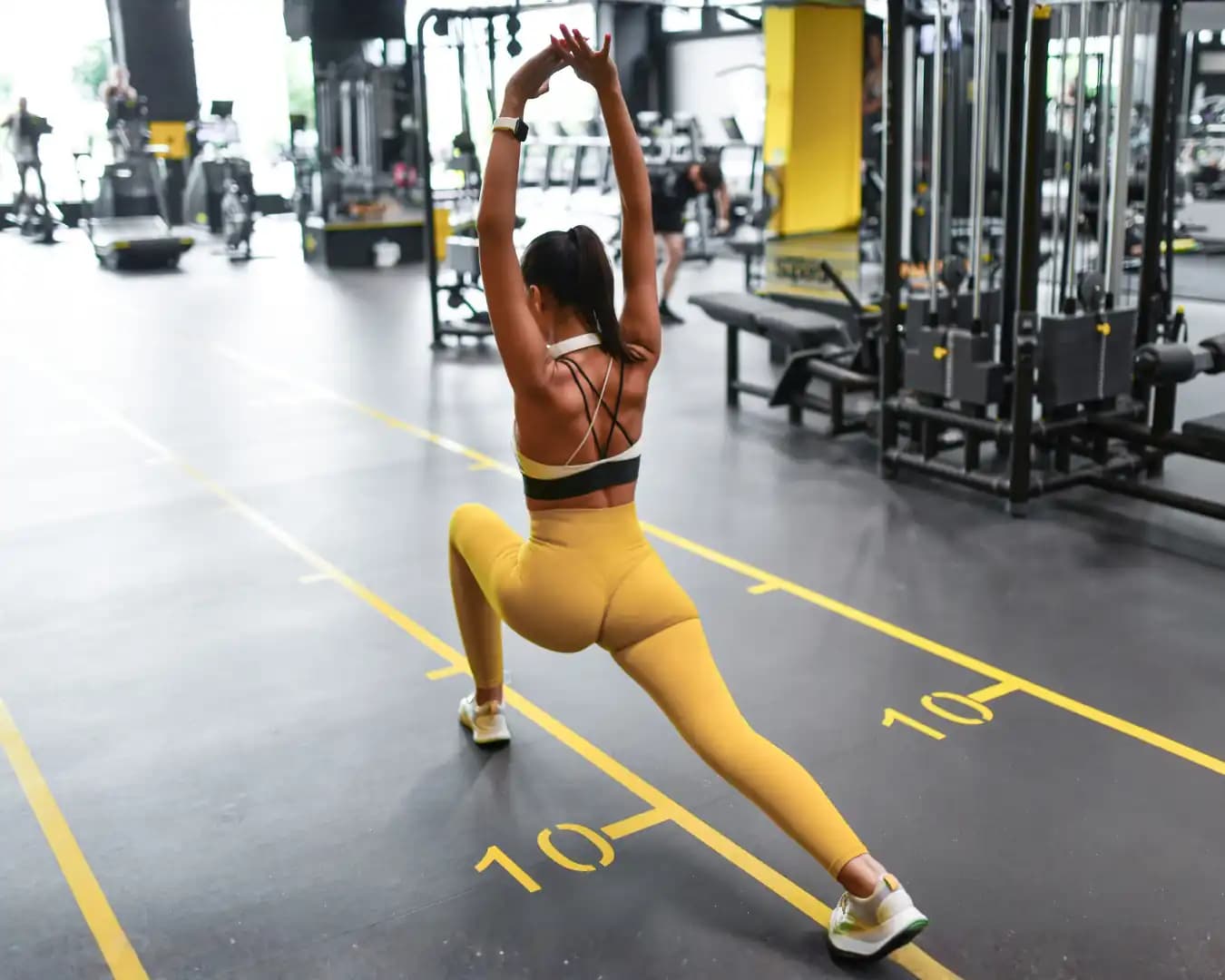
Tight hip flexors are common if you sit for long hours, train hard, drive often, or skip mobility work.
Your hip flexors are the muscles at the front of your hips that help lift your thigh toward your torso. They are active when you walk, climb stairs, run, sit, squat, and lunge.
When these muscles feel tight or overactive, you may notice:
stiffness in the front of the hips
difficulty standing tall after sitting
limited stride length
lower-back tightness
reduced hip extension
discomfort during lunges or squats
excessive arching in the lower back
That’s why stretching hip flexors can be useful when done correctly. But stretching alone is not always enough. For lasting improvement, hip flexor stretching works best when combined with glute activation, core control, strength training, and regular movement breaks.
Note: This article is educational and not medical advice. If you have sharp hip pain, recent injury, numbness, radiating symptoms, or pain that worsens with movement, consult a qualified healthcare professional.
Why Hip Flexors Get Tight
Hip flexor tightness can come from several factors.
Common contributors include:
prolonged sitting
low daily movement
weak glutes
poor core control
repetitive running or cycling
excessive lower-back arching
limited hip mobility
training without recovery
Sitting keeps the hips in a flexed position for long periods. Over time, many people feel restricted when trying to extend the hip fully.
However, “tight” does not always mean the muscle is physically short. Sometimes the area feels tight because the body lacks strength, control, or tolerance in certain positions.
That is why the PureFit Coach Team usually treats hip flexor tightness as a movement pattern—not just a stretching problem.
Benefits of Stretching Hip Flexors
A consistent hip flexor stretching routine may help support:
better hip mobility
improved standing posture
reduced front-hip stiffness
better lunge and squat mechanics
improved glute activation
more comfortable walking and stride length
reduced lower-back compensation
The key is to stretch with control.
Aggressive stretching can irritate the hip or lower back. Gentle, repeated practice is usually more effective than forcing deep ranges.
5 Stretches for Stretching Hip Flexors
Below are five hip flexor stretches from the PureFit Coach exercise library. Start with 2–3 movements if you are new, then progress gradually.
1. Kneeling Hip Flexor Stretch
Best for: Basic hip flexor tightness and beginner-friendly mobility
This is the foundation of most hip flexor stretching routines.
How to do it:
Start in a half-kneeling position.
Place one knee on the floor and the other foot in front.
Gently tuck your pelvis under.
Squeeze the glute on the back-leg side.
Shift slightly forward.
Hold 20–30 seconds per side.
Coaching tip:
Do not arch your lower back. If you only feel pressure in your spine, reset your pelvis and reduce the forward shift.
2. Couch Stretch With Chair for Hip Flexors
Best for: Hip flexor and quad tightness
The couch stretch is more intense because it also targets the front thigh.
How to do it:
Place one foot behind you on a chair.
Put the same-side knee on a soft surface.
Bring the other foot forward.
Keep your torso tall.
Gently tuck your pelvis.
Hold 20–30 seconds per side.
Coaching tip:
Start with a smaller range. If this feels too intense, move your knee farther from the chair or use the regular kneeling hip flexor stretch first.
3. Half-Kneeling Hip Flexor Pulse
Best for: Dynamic warm-up before lower-body training
This is a more active version of the kneeling hip flexor stretch.
How to do it:
Start in a half-kneeling position.
Tuck your pelvis slightly.
Squeeze the back-leg glute.
Shift forward slowly.
Return to the start.
Perform 8–12 controlled pulses per side.
Coaching tip:
Keep the movement small and controlled. This should feel like gentle mobility, not bouncing into pain.
4. Forward Lunge Reach Back
Best for: Hip flexors, anterior chain, and posture integration
This movement combines hip extension with a reach, making it useful for people who sit often.
How to do it:
Step one foot forward into a lunge position.
Keep the back leg long.
Squeeze the back-leg glute.
Reach the same-side arm slightly back or overhead.
Hold briefly, then return.
Perform 5–8 reps per side.
Coaching tip:
Avoid collapsing into the lower back. Think “long through the front of the hip,” not “bend as far back as possible.”
5. Bridge Stretch
Best for: Front-body opening and hip extension awareness
Bridge variations can help open the front of the hips while also encouraging glute engagement.
How to do it:
Lie on your back with knees bent.
Place feet flat on the floor.
Gently tuck your pelvis.
Push through your heels.
Lift your hips.
Hold 2–5 seconds.
Lower slowly.
Repeat 8–10 reps.
Coaching tip:
This is not about lifting as high as possible. Focus on glutes, not lower-back arching.
Simple 8-Minute Hip Flexor Stretching Routine
Try this routine after sitting, after training, or on recovery days:
Kneeling Hip Flexor Stretch — 30 seconds per side
Couch Stretch With Chair — 20 seconds per side
Half-Kneeling Hip Flexor Pulse — 10 reps per side
Forward Lunge Reach Back — 6 reps per side
Bridge Stretch — 8 slow reps
Repeat once if needed.
Start with gentle effort. You should feel better after the routine, not irritated.
When Should You Stretch Hip Flexors?
You can stretch hip flexors:
after long sitting
after lower-body workouts
on recovery days
before training as dynamic mobility
during short movement breaks
after cycling or running
For warm-ups, use more dynamic movements like half-kneeling pulses or forward lunge reach backs.
For recovery, use slower holds like kneeling hip flexor stretch or couch stretch.
Common Mistakes When Stretching Hip Flexors
This is the most common mistake.
If you arch the lower back, you may avoid the real hip flexor stretch and create pressure in the spine.
Use a slight pelvic tuck and glute squeeze.
2. Stretching too aggressively
More intensity does not always mean better results.
Stay in a mild to moderate stretch.
3. Only stretching, never strengthening
If hip flexor tightness keeps returning, the issue may include weak glutes, weak core control, or poor training balance.
Stretching should be paired with strength.
4. Ignoring daily sitting habits
Stretching for 5 minutes helps, but sitting for 8 hours without breaks can keep recreating the same tightness.
Use short movement breaks during the day.
5. Choosing advanced backbend-style stretches too early
Exercises like camel stretch, cobra stretch, upward-facing dog, and deep backbend stretches may open the front body, but they can also increase lower-back extension if control is limited.
Start with hip-focused positions first.
PureFit Coach Team SuggestionsThe PureFit Coach Team suggests using hip flexor stretching as part of a full movement strategy.
For most people:
stretch hip flexors 2–4 times per week
include dynamic hip mobility before lower-body workouts
combine stretching with glute and core strengthening
take movement breaks during long sitting periods
avoid forcing deep ranges
progress gradually over several weeks
If hip flexor tightness keeps returning, ask:
“Why are my hips getting tight again?”
Often, the answer is a mix of sitting time, weak glutes, low movement variety, and lack of consistent mobility work.
The kneeling hip flexor stretch is a good starting point for most people. The couch stretch is more intense and may be useful when the front thigh is also tight.
How often should I stretch hip flexors?
Many people can start with 2–4 short sessions per week. Consistency matters more than long sessions.
Can tight hip flexors cause lower-back tightness?
They may contribute to lower-back compensation in some people, especially when combined with weak glutes, poor core control, or prolonged sitting.
Should stretching hip flexors hurt?
No. You may feel mild to moderate tension, but sharp pain or pinching is a sign to stop or modify.
Is stretching enough to fix tight hip flexors?
Not always. Long-term improvement usually requires stretching, mobility, glute activation, core control, strength training, and better daily movement habits.
Stretching hip flexors can help reduce stiffness, improve hip mobility, and support better posture and lower-body movement.
But the best results come when stretching is part of a complete system.
Use gentle stretches.
Add strength.
Move more often.
And focus on consistency instead of forcing deep positions.
Also see our post about stretching lower back here.