
Stretching Hamstrings: 6 Stretches for Tight Legs
Learn how to stretch tight hamstrings safely with 6 exercises, proper technique, and a simple routine to improve flexibility and movement.
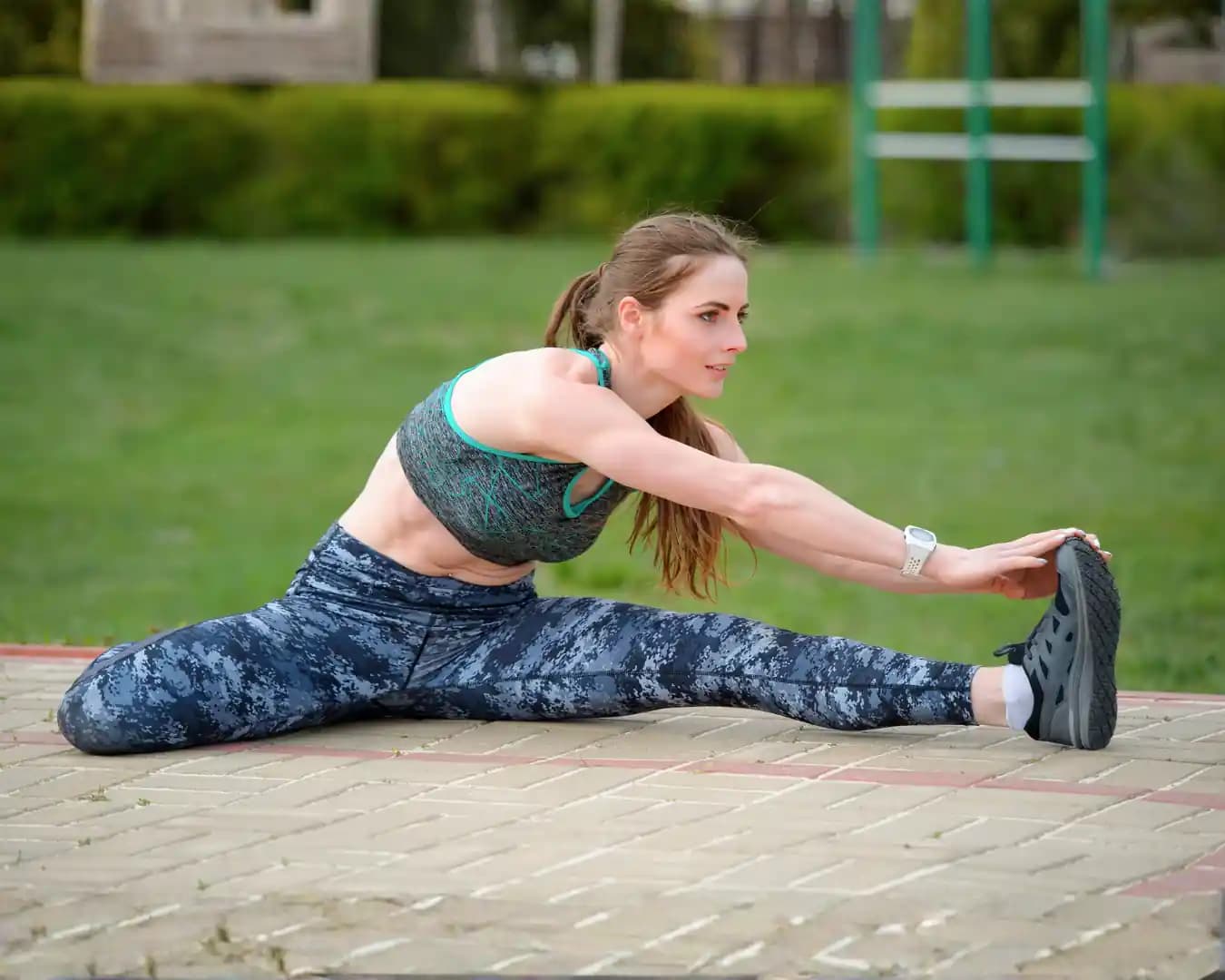
Key Takeaways
Stretching hamstrings regularly can improve flexibility and range of motion.
Start with gentle stretches such as a banded hamstring stretch or half-kneeling hamstring stretch.
Hold static stretches for approximately 20–30 seconds without bouncing or forcing the movement.
Slightly bending your knees is acceptable, especially if you have limited flexibility.
Hamstring tightness does not always mean your muscles are physically shortened. Strength, movement control, and other factors may contribute.
Combine stretching with progressive strength training for a more complete approach.
To stretch your hamstrings safely, warm up briefly, choose a comfortable position, hinge at your hips, and move until you feel gentle tension behind your thighs. Hold the position for approximately 20–30 seconds while breathing normally. Repeat on both sides and progress gradually rather than forcing yourself to touch your toes.
The six exercises below offer different starting positions and difficulty levels, making it easier to choose an approach that fits your flexibility and training goals.
What Are the Hamstrings, and Why Do They Feel Tight?
Your hamstrings are a group of three muscles located at the back of your thighs: the biceps femoris, semitendinosus, and semimembranosus.
They help bend your knees, extend your hips, and control lower-body movements such as walking, running, squatting, and bending forward.
You may notice hamstring tightness when:
Bending forward to reach your feet.
Straightening your knees while sitting.
Performing a hip hinge or deadlift.
Returning to exercise after inactivity.
Sitting for extended periods.
Recovering from demanding lower-body workouts.
However, feeling tight does not automatically mean your hamstrings are too short.
Mayo Clinic Sports Medicine explains that perceived tightness can be influenced by the nervous system, discomfort, and movement tolerance. Sometimes strengthening and movement retraining provide more lasting improvement than repeatedly stretching the same area.
What Are the Benefits of Stretching Hamstrings?
The most established benefit of hamstring stretching is improved flexibility and joint range of motion.
A 2025 systematic review of stretching mechanisms found that increases in range of motion can involve changes in stretch tolerance and tissue properties.
1. Improved flexibilityRegular stretching may increase how far you can comfortably move through hip flexion and knee extension.
This can make movements such as reaching toward your feet feel easier.
2. More comfortable lower-body movementImproved flexibility may help you access positions used in hip hinges, certain yoga movements, and everyday bending tasks.
However, good movement also depends on coordination, joint mobility, and strength.
3. Better awareness of movement limitationsStretching gives you an opportunity to notice differences between sides.
For example, one leg may feel more restricted than the other, or your lower back may begin rounding before your hips move very far.
4. Support for a balanced exercise routineHamstring flexibility work can complement lower-body strength training.
It should not replace exercises that develop hamstring strength, such as hip hinges, bridges, and controlled deadlift variations.
Important: Stretching alone has not been shown to consistently prevent injuries. Its strongest established benefit is improved flexibility.
What Are the 6 Best Hamstring Stretches to Try at Home?
These six stretches are available in the PureFit Coach exercise library.
They range from beginner-friendly supported stretches to more demanding seated flexibility positions.
You do not need to perform all six in one session. Choose two or three that match your current ability.
1. How Do You Perform a Banded Hamstring Stretch?
Exercise: Hamstring Stretch Banded
Best for: Beginners, controlled flexibility, and stretching without bending forward
Equipment: Resistance band or stretching strap
How to do it:
Lie on your back with both legs relaxed.
Loop a band around the middle of one foot.
Slowly raise that leg toward the ceiling.
Keep a slight knee bend if needed.
Gently bring the leg closer until you feel tension behind the thigh.
Hold for 20–30 seconds, then switch sides.
PureFit coaching cue: Keep your hips on the floor and avoid pulling the leg aggressively toward your chest.
Common mistake: Locking the knee while pulling too hard on the band.
This is one of the best starting options because the floor supports your back, making it easier to adjust the intensity.
2. How Do You Perform a Half-Kneeling Hamstring Stretch?
Exercise: Half Kneeling Hamstring Stretch
Best for: Dynamic mobility, beginners, and lower-body workout preparation
How to do it:
Start in a half-kneeling position.
Extend your front leg with the heel on the floor.
Point your toes upward.
Keep your spine comfortably neutral.
Slowly shift your hips backward and hinge forward.
Return to the starting position.
Perform 8–10 controlled repetitions per side, or hold a comfortable position for 20–30 seconds.
PureFit coaching cue: Move from your hips rather than rounding your entire back.
Common mistake: Trying to reach the toes by collapsing through the lower back.
This exercise is especially useful before lower-body training because it can be performed dynamically.
3. How Do You Do the Seated Hamstring Stretch?
Exercise: Hamstring Stretch Seated
Best for: Desk workers, beginners, and simple stretching breaks
How to do it:
Sit near the front edge of a stable chair.
Extend one leg with the heel resting on the floor.
Keep the other foot flat.
Sit tall and gently hinge forward at the hips.
Stop when you feel a comfortable stretch behind the extended thigh.
Hold for 20–30 seconds per side.
PureFit coaching cue: Think about moving your chest forward rather than forcing your head toward your knee.
Common mistake: Rounding the back excessively to reach farther.
This version is convenient because it requires no floor space or exercise equipment.
4. How Do You Perform a Seated Pike Stretch?
Exercise: Seated Pike Stretch / Seated To Touch
Best for: Bilateral hamstring flexibility and forward-fold progression
How to do it:
Sit on the floor with both legs extended forward.
Keep your feet pointing upward.
Sit tall with a small knee bend if needed.
Gently hinge forward at your hips.
Reach toward your shins, ankles, or feet.
Hold for 20–30 seconds.
PureFit coaching cue: The goal is not touching your toes. The goal is creating controlled hip flexion while feeling a stretch behind your thighs.
Common mistake: Pulling the upper body forward with momentum.
If sitting upright is difficult, place a folded towel under your hips or bend your knees slightly.
5. How Do You Perform a Half Pancake Stretch?
Exercise: Half Pancake Stretch / Seated Half Straddle Stretch
Best for: One-sided hamstring flexibility and combined hip mobility
How to do it:
Sit on the floor.
Extend one leg diagonally outward.
Bend the opposite knee into a comfortable position.
Turn your torso toward the extended leg.
Hinge forward gently from your hips.
Hold for 20–30 seconds, then switch sides.
PureFit coaching cue: Keep both hips comfortably grounded and avoid twisting aggressively to reach your foot.
Common mistake: Forcing the knee or pulling the body into a position beyond your current range.
The half pancake is useful when you want to work one side at a time while also exploring hip positioning.
6. How Do You Perform a Pancake Stretch?
Exercise: Pancake Stretch / Seated Straddle Stretch
Best for: Intermediate flexibility and combined hamstring-adductor mobility
How to do it:
Sit with both legs extended in a comfortable wide position.
Keep your knees pointing upward.
Sit tall and brace your torso lightly.
Slowly hinge forward from your hips.
Place your hands on the floor for support.
Hold for 20–30 seconds while breathing normally.
PureFit coaching cue: Start with a moderate leg width. A wider position is not automatically better.
Common mistake: Forcing the legs apart or excessively rounding the back.
Unlike a straight-leg hamstring stretch, the pancake also places considerable demand on the inner-thigh muscles.
Beginners should master easier variations before trying to increase the depth of this position.
What Is a Simple 8-Minute Hamstring Stretching Routine?
Try this routine after lower-body training or as a separate flexibility session.
Preparation — 1 minute
Walk in place or perform gentle marching to warm up.
Main routine — approximately 6 minutes
Half-Kneeling Hamstring Stretch — 10 controlled repetitions per side.
Banded Hamstring Stretch — 30 seconds per side, twice.
Seated Pike Stretch — 30 seconds, twice.
Half Pancake Stretch — 30 seconds per side.
Finish — 1 minute
Perform a few comfortable bodyweight hip hinges to practice using your available range of motion.
Keep the movements slow and controlled. Reduce the number of exercises if you are new to stretching.
How Often Should You Stretch Your Hamstrings?
For general flexibility, stretching your hamstrings at least two to three times per week is a reasonable starting point.
Mayo Clinic recommends holding stretches for around 30 seconds and working major muscle groups at least two to three days weekly.
More frequent short sessions may also be suitable when they remain comfortable and do not irritate the tissues.
A practical schedule might include:
Monday: Hamstring stretching after lower-body strength training.
Wednesday: Short hamstring and hip mobility session.
Friday: Hamstring stretching after training.
Weekend: Optional gentle recovery session.
Consistency over several weeks matters more than performing one very intense session.
Should You Stretch Hamstrings Before or After Exercise?
Both can be useful, but the technique should match the purpose.
Before exercise, prioritize movement-based drills that prepare you for the upcoming activity.
Good choices include:
Half-kneeling hamstring stretch with controlled repetitions.
Bodyweight hip hinges.
Gentle leg swings.
Progressive warm-up sets.
After exercise, slower static stretches may be more appropriate when flexibility is your goal.
Good choices include:
Banded hamstring stretch.
Seated hamstring stretch.
Seated pike stretch.
Research suggests that prolonged static stretching immediately before maximal strength efforts can temporarily reduce isolated muscle force. Shorter stretches combined with a dynamic warm-up generally present less concern.
Why Do Your Hamstrings Still Feel Tight After Stretching?
If hamstring tightness returns quickly, more stretching is not necessarily the solution.
Several factors may be involved:
Limited tolerance to stretching.
Insufficient hamstring strength at longer muscle lengths.
Lower-back or hip movement limitations.
Training fatigue.
Previous injuries.
Sensitivity involving nerves rather than only muscle tissue.
For example, someone may feel tight during a forward bend but have reasonable flexibility when lying down.
That difference suggests the limitation may involve more than hamstring length.
PureFit coaching approach: First identify which movement feels restricted, then determine whether stretching, strengthening, or better movement control should be emphasized.
A useful progression is:
Assess the comfortable movement range.
Try one gentle stretch.
Repeat the movement to check whether it feels easier.
Add an appropriate strength exercise.
Reassess over several sessions.
For related techniques, see our Self-Myofascial Release Guide.
What Are the Most Common Hamstring Stretching Mistakes?
1. Forcing yourself to touch your toesToe touching depends on hamstring flexibility, hip mobility, body proportions, and spinal movement.
It is not a universal measure of healthy flexibility.
2. Locking your knees aggressivelyA straight knee can increase the stretch, but forcing knee extension may create discomfort.
A slight bend is acceptable.
3. Stretching through nerve-like symptomsBurning, tingling, electric sensations, or pain radiating below the knee are different from normal stretching tension.
Stop the movement and seek professional evaluation if these symptoms occur.
4. Bouncing into the stretchRepeated bouncing can make it harder to control intensity.
Use slow movement and comfortable holds instead.
5. Ignoring strength trainingStretching can improve flexibility, but hamstring strength is important for controlling movement and tolerating exercise loads.
A complete plan should include both.
How Can You Combine Hamstring Stretching With Strength Training?
Stretching and strengthening address different aspects of movement.
Stretching helps you explore and improve range of motion. Strength training develops the ability to produce and control force through that range.
Useful complementary exercises include:
Glute bridges.
Romanian deadlifts with appropriate resistance.
Hip hinges.
Hamstring curls.
Supported single-leg hinges.
Beginners should start with light resistance, good technique, and gradual progression.
For a broader workout structure, explore our Beginner Strength Training Guide.
You can also combine hamstring work with Hip Flexor Stretching when both front-hip and back-of-thigh mobility need attention.
What Does the PureFit Coach Team Recommend?
The PureFit Coach Team recommends choosing hamstring stretches according to the person's starting flexibility, comfort, and training goals.
Our practical exercise-selection approach is:
New to stretching: Begin with a banded or chair-supported stretch.
Preparing for exercise: Choose the dynamic half-kneeling variation.
Developing bilateral flexibility: Progress to a seated pike.
Working on wider hip positions: Introduce half pancake or pancake stretches gradually.
Experiencing recurring tightness: Review strength and movement control instead of automatically increasing stretch intensity.
A helpful technique check is to record one repetition from the side and observe whether the forward movement comes mainly from the hips or from excessive spinal rounding.
Choose exercises that feel controlled and repeatable.
For a complete flexibility program, see our Stretching Workout Guide.
Want a personalized plan? Explore PureFit Coach for coach-guided strength, mobility, and flexibility training that adapts to your goals, equipment, and progress.
Frequently Asked Questions About Stretching Hamstrings
What is the best hamstring stretch for beginners?A lying banded hamstring stretch or seated chair stretch is a good starting option. Both let you control intensity without demanding advanced flexibility.
Is it okay to bend your knees while stretching hamstrings?Yes. Slight knee bending can make a stretch more comfortable and help you maintain better hip and back positioning. Gradually straighten the knee as tolerated.
Can stretching hamstrings help lower-back discomfort?Sometimes, particularly when limited hamstring flexibility contributes to uncomfortable movement. However, back discomfort has many possible causes, and stretching is not a universal treatment.
How long does it take to improve hamstring flexibility?Some people notice a temporary improvement immediately. Longer-term improvements generally require consistent practice over several weeks, with results varying between individuals.
Can you stretch hamstrings every day?Gentle daily stretching may be appropriate if it does not cause pain or irritation. You do not need to stretch daily to improve flexibility.
Should hamstring stretching feel painful?No. You should feel mild to moderate tension rather than sharp pain, tingling, burning, or a pulling sensation that worsens.
Final Thoughts
Stretching hamstrings does not need to be complicated.
Start with a comfortable exercise, focus on hip movement, and gradually explore your available range.
For most beginners, a banded or half-kneeling hamstring stretch is enough to get started. More advanced variations can be introduced as flexibility and control improve.
The objective is not simply to touch your toes.
It is to develop usable flexibility that supports comfortable movement and a balanced strength training routine.
Sources and Further Reading
Systematic Review — Optimising the Dose of Static Stretching to Improve Flexibility
Systematic Review — Mechanisms Underlying Range of Motion Improvements
Systematic Review — Stretching and Acute Strength Performance
Expert Consensus — Practical Recommendations on Stretching Exercise
Medical disclaimer: This article provides general exercise education, not diagnosis or individualized medical treatment. Avoid stretching through significant pain or suspected hamstring injury. Seek clinical advice for persistent symptoms, radiating pain, numbness, or weakness.