
Lumbar Lordosis: Causes & 5 Exercises to Help
Learn what lumbar lordosis is, common causes, and 5 exercises that may help improve alignment with a consistent plan.
Lumbar Lordosis: What It Is, Causes & How to Fix It
Lumbar lordosis refers to the natural inward curve of the lower spine. A certain amount of curvature is normal and helps distribute load during movement.
Problems arise when this curve becomes excessive, sometimes described as “swayback posture.” This may be associated with discomfort, movement inefficiency, or postural imbalance.
The good news: in many cases, lumbar lordosis patterns can improve with consistent training, mobility work, and better movement habits, approaches supported by organizations like ACSM, NSCA, and NASM.
Note: This content is educational and not medical advice. If you experience persistent pain or structural conditions, consult a qualified healthcare professional.
What Is Lumbar Lordosis?
The lumbar spine (lower back) naturally curves inward.
When this curve becomes exaggerated, it may be associated with:
anterior pelvic tilt
increased lower-back arch
tension in the lower back
reduced core and glute activation
This pattern is often linked to muscle imbalances, not just bone structure.
Common Causes of Lumbar Lordosis
Most cases are influenced by lifestyle and movement habits.
- Prolonged sitting. Long hours sitting can tighten hip flexors and reduce glute activation.
- Weak core muscles. Deep core muscles help stabilize the pelvis and spine.
- Underactive glutes. Glutes play a key role in controlling pelvic position.
- Tight hip flexors and lower back muscles. These can pull the pelvis into an anterior tilt.
- Imbalanced training routines. Focusing only on certain muscles (e.g., abs or quads) without a balanced program can contribute to posture issues.
Coaching Insights From the PureFit Coach Team
A holistic resistance training approach works best.From coaching experience, the most effective improvements for lumbar lordosis come from:
combining strength training + corrective exercises
addressing the full body, not just the lower back
progressing gradually over time
Isolated fixes rarely produce lasting change.
Consistency over intensity.Postural changes like fixing lumbar lordosis typically require:
regular practice
gradual adaptation
long-term consistency
5 Exercises That May Help Improve Lumbar Lordosis
These lumbar lordosis exercises target common imbalances associated with excessive lumbar curvature.
- Glute Bridge. Strengthens glutes to support pelvic alignment.
- Dead Bug. Improves core stability and control of the spine.
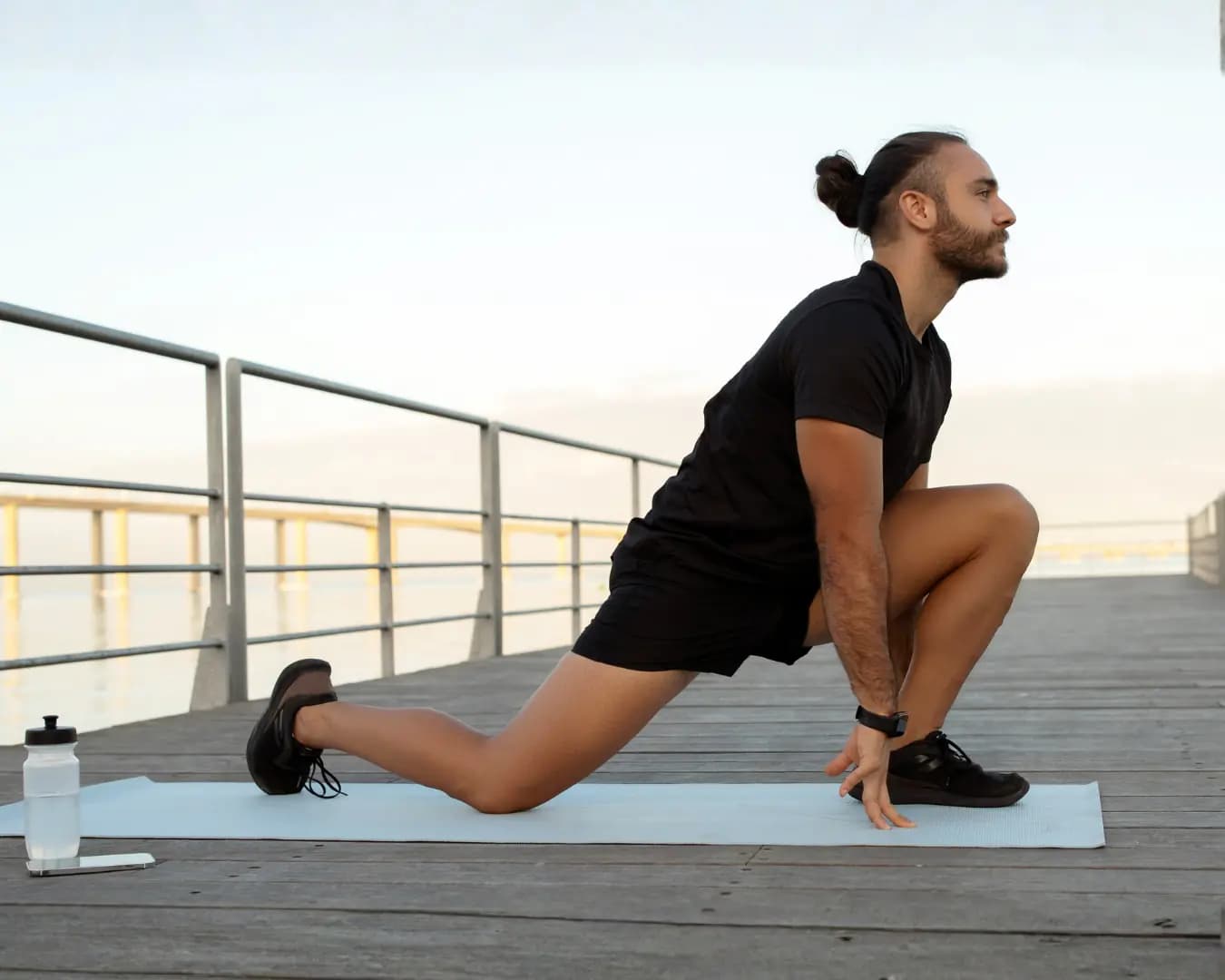
- Hip Flexor Stretch. Helps reduce tightness from prolonged sitting.
- Plank (Neutral Spine Focus). Builds core endurance while reinforcing proper alignment.
- Bird Dog. Enhances coordination between core and hips.
These exercises are commonly used in corrective training programs for lumbar lordosis and recommended by organizations such as NASM and NSCA.
Common Mistakes We Often See
- Trying to fix it alone without guidance. Many people follow random exercises without understanding their movement pattern.
- Looking for quick fixes. Postural changes take time. Short-term solutions rarely work.
- Inconsistency. Stopping early prevents meaningful improvement.
- Lack of accountability. Without guidance or structure, many people drop out before seeing results.
PureFit Coach Team Suggestions
For most people, to fix lumbar lordosis, we suggest:
✔ Perform corrective exercises multiple times per week
✔ Combine them with a full-body strength program
✔ Stay consistent for several months
✔ Focus on quality and control—not intensity
A coach or structured program can help maintain accountability and progression.
How Long Does It Take to Improve Lumbar Lordosis?
Improvements vary, but generally:
early changes may be noticed in a few weeks
more visible alignment changes take longer
long-term consistency is essential
Posture improvement is a gradual process, not an instant correction.
When to Seek Professional Help
Consult a healthcare professional if:
you experience persistent or worsening pain
symptoms affect daily function
there are underlying medical conditions
Final Thoughts
Lumbar lordosis is often influenced by:
lifestyle habits
muscle balance
movement patterns
With the right approach, combining strength training, corrective lumbar lordosis exercises, and consistency, many people can improve alignment and movement quality over time.