
Hip Mobility Exercises: 7 Drills for Tight Hips
Try 7 hip mobility exercises to relieve tight hips, improve movement, and support better strength training at home.
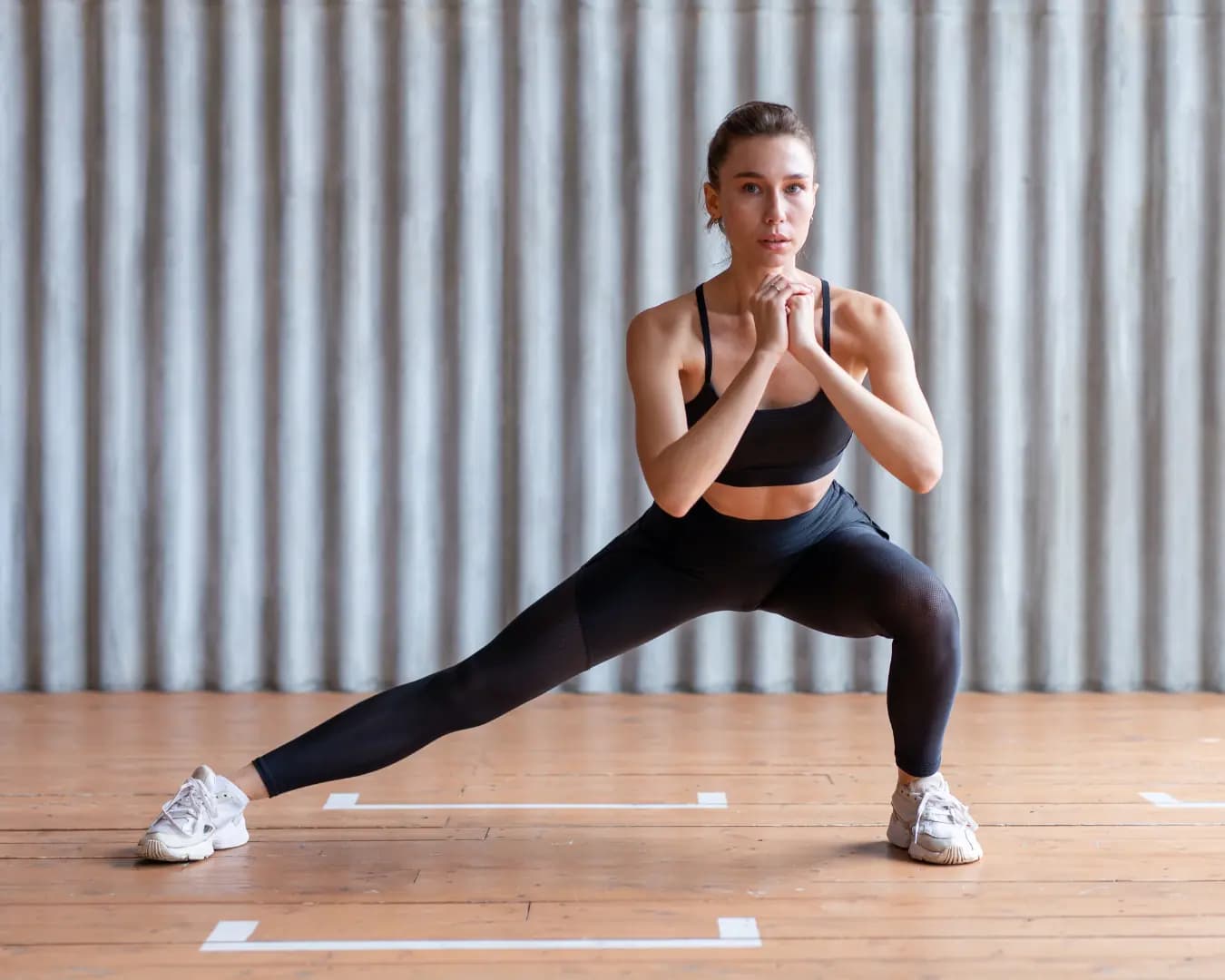
Tight hips are common if you sit for long hours, train hard, skip mobility work, or feel limited during squats, lunges, and daily movement.
That’s where hip mobility exercises can help.
Hip mobility exercises are not just about “stretching more.” It is your ability to move the hip joint through a useful range of motion with control. That combination of range and control matters for strength training, posture, walking, stairs, and lower-body movement.
The PureFit Coach Team often sees tight hips connected with other issues, such as lower back stiffness, knee discomfort, reduced squat depth, and poor glute activation. A short, consistent hip mobility exercise routine can help your body move better before workouts and feel less restricted during the day.
Note: This content is educational and not medical advice. If you have sharp hip pain, recent injury, numbness, significant joint restriction, or symptoms that worsen with movement, consult a qualified healthcare professional.
Why Hip Mobility Matters for Daily Life and Performance
Your hips are involved in almost every lower-body movement.
They help you:
walk
climb stairs
squat
lunge
hinge
rotate
get up from the floor
stabilize your pelvis
When hip mobility is limited, your body may compensate through the lower back, knees, or ankles. That does not mean hip stiffness is always the only cause of discomfort, but it can be an important contributor.
Good hip mobility can support:
better squat and lunge mechanics
improved glute activation
reduced movement compensation
better posture and pelvic control
smoother daily movement
stronger lower-body training
ACSM’s flexibility and mobility guidance emphasizes that flexibility work can support range of motion, and ACSM Health & Fitness Journal notes that mobility includes movement control, not just passive flexibility.
Hip Mobility vs Hip Flexibility
Hip flexibility means a muscle can lengthen.
Hip mobility means you can actively control movement through range.
For example:
Being able to pull your knee toward your chest is flexibility.
Being able to control your hip through a squat, lunge, or rotation is mobility.
That is why effective hip mobility exercises often combine:
stretching
active control
strength
rotation
breathing
A good hip mobility routine should not only make you feel looser. It should help you move better.
7 Best Hip Mobility Exercises to Do Daily
Below are seven practical hip mobility drills. You do not need to do all seven every day. Start with 3–4 that match your limitations, then progress gradually.
1. 90/90 Hip Stretch
Target: Internal and external hip rotation
The 90/90 stretch is one of the most useful hip mobility exercises because it trains rotation on both sides of the hip.
How to do it:
Sit on the floor.
Place one leg in front with the knee bent around 90 degrees.
Place the other leg to the side/back with the knee also bent around 90 degrees.
Keep your chest tall.
Slowly lean forward over the front leg.
Hold 20–30 seconds, then switch sides.
Coaching tip:
If sitting upright is difficult, place your hands behind you for support or sit on a yoga block.
2. Half-Kneeling Hip Flexor Stretch
Target: Anterior hip tightness from sitting
Long sitting can make the front of the hips feel tight. This stretch targets the hip flexors.
How to do it:
Start in a half-kneeling position.
Place one knee on the floor and the other foot in front.
Gently tuck your pelvis under.
Squeeze the glute on the back-leg side.
Shift slightly forward without arching your lower back.
Hold 20–30 seconds per side.
Coaching tip:
Do not overextend the lower back. The stretch should be felt in the front of the hip, not as pressure in the spine.
3. Frog Stretch
Target: Inner thigh and adductor mobility
The frog stretch can help open the hips by targeting the adductors.
How to do it:
Start on hands and knees.
Move your knees wider apart.
Keep your feet in line with your knees.
Slowly shift your hips backward.
Hold 20–30 seconds.
Coaching tip:
This should feel like a controlled inner-thigh stretch. Avoid forcing the knees wider than comfortable.
4. World’s Greatest Stretch
Target: Hip mobility, hamstrings, thoracic rotation
This drill combines hip mobility with upper-back rotation, making it useful before workouts.
How to do it:
Start in a high plank.
Step one foot outside your hand.
Drop your hips slightly.
Rotate your chest toward the front leg.
Reach one arm upward.
Return and switch sides.
Perform 4–6 slow reps per side.
Coaching tip:
Move slowly. The goal is control, not speed.
5. Deep Squat Hold with Rotation
Target: Hip opening, ankle mobility, squat position
A deep squat hold helps improve tolerance in a lower-body position used in many daily and training movements.
How to do it:
Stand with feet slightly wider than hip-width.
Squat down as far as comfortable.
Keep heels on the floor if possible.
Use elbows to gently press knees outward.
Add a small rotation by reaching one arm upward.
Hold 20–30 seconds or perform 3–5 rotations per side.
Coaching tip:
Elevate your heels slightly if your ankles or hips feel restricted.
6. Cossack Squat
Target: Lateral hip mobility and strength
The Cossack squat is more active than a passive stretch because it combines mobility and strength.
How to do it:
Stand wide.
Shift your weight to one side.
Bend one knee while keeping the other leg straight.
Keep your chest tall.
Return to center and switch sides.
Perform 5–8 reps per side.
Coaching tip:
Start shallow. You do not need to go deep at first.
7. Hip Controlled Articular Rotations (CARs)
Target: Active hip control through full range of motion
Hip CARs train controlled movement around the hip joint.
How to do it:
Stand tall and hold a wall or chair for balance.
Lift one knee toward your chest.
Rotate the hip outward.
Move the knee around slowly in a controlled circle.
Reverse the movement.
Perform 3–5 slow circles per side.
Coaching tip:
Keep the torso still. The movement should come from the hip, not from swinging the body.
How to Structure Your Hip Mobility Routine
You do not need a long routine to improve hip mobility.
The PureFit Coach Team suggests starting with 5–10 minutes, 3–5 days per week.
Before Lower-Body Workouts
Use dynamic hip mobility exercises:
- World’s greatest stretch
- Hip CARs
- Deep squat hold with rotation
- Cossack squat
After Workouts or on Recovery Days
Use slower stretches:
- 90/90 stretch
- Half-kneeling hip flexor stretch
- Frog stretch
Simple 8-Minute Hip Mobility Routine
Try this:
Hip CARs — 3 slow circles per side
Half-kneeling hip flexor stretch — 30 seconds per side
90/90 stretch — 30 seconds per side
World’s greatest stretch — 5 reps per side
Cossack squat — 6 reps per side
Repeat if needed.
Common Hip Mobility Mistakes to Avoid
1. Only stretching without control
Passive stretching can help, but mobility requires active control. Add drills like Cossack squats and hip CARs.
2. Forcing deep positions
Painful stretching is not better. Stay in a range you can control.
3. Ignoring strength training
New range of motion becomes more useful when you strengthen it.
4. Doing mobility only when you feel tight
Consistency matters more than occasional long sessions.
5. Moving too fast
Hip mobility drills work best when performed slowly and intentionally.
PureFit Coach Team Suggestions
The PureFit Coach Team suggests treating hip mobility as part of your workout system, not a quick fix.
For most people:
include hip mobility before lower-body training
use slower hip stretches on recovery days
train glutes and core alongside mobility work
avoid painful ranges
stay consistent for several weeks
If tight hips keep returning, the goal should not be only “stretch more.” The better question is:
What daily habits or training gaps are causing the tightness to come back?
Often, the answer involves sitting time, weak glutes, limited movement variety, or lack of consistent mobility work.
Frequently Asked Questions
What are the best hip mobility exercises?
Common options include the 90/90 stretch, half-kneeling hip flexor stretch, frog stretch, world’s greatest stretch, Cossack squats, deep squat holds, and hip CARs.
How often should I do hip mobility exercises?
Many people can start with 5–10 minutes, 3–5 days per week. Consistency matters more than session length.
Can hip mobility help lower back stiffness?
It may help if hip stiffness contributes to compensation through the lower back. However, persistent or severe back pain should be evaluated by a qualified professional.
Should I do hip mobility before or after workouts?
Dynamic hip mobility works well before workouts. Slower stretching can fit after training or on recovery days.
Are hip mobility exercises good for squats?
Yes. Better hip control and range of motion may support squat depth, positioning, and comfort.
Final Thoughts
Hip mobility exercises can help you move better, train smarter, and feel less restricted during daily life.
The best approach is simple:
- choose a few drills
- move slowly
- stay consistent
- combine mobility with strength
Your hips do not need extreme stretching.
They need usable range, control, and regular movement.